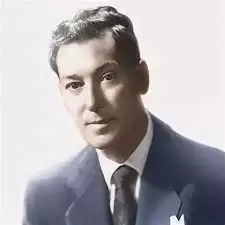
For four decades, Abdullah taught the principles of consciousness manifestation from his modest apartment on West 72nd Street in New York City. His most famous student, Neville Goddard, arrived at his lectures already equipped with knowledge, techniques, and years of study. Yet Neville was still struggling. The reason? Knowing about consciousness and actually being conscious are entirely different experiences.
When Abdullah first encountered Neville, he greeted him with a startling revelation: "Neville, you are six months late." This wasn't mere theatrics. Abdullah had been expecting him, and more importantly, he understood something that would take Neville years to fully grasp—that the very act of seeking keeps you from possessing what you desire.
After observing thousands of students over forty years, Abdullah identified a consistent pattern. The fastest success stories weren't the most educated individuals or those who had mastered countless techniques. They were the ones who could approach truth with childlike simplicity, setting aside accumulated knowledge long enough to actually experience the principles rather than merely understanding them intellectually.
Most people fall into what Abdullah called the preparation trap. They convince themselves they need more information, more practice, more certainty before fully committing to their desires. But this endless preparation is itself an assumption—the assumption of "not yet ready"—and that assumption becomes exactly what manifests in their reality.
The mind loves to disguise postponement as preparation. Every day spent preparing to manifest is a day spent assuming you're not yet ready. Abdullah watched this pattern repeat for forty years: students would come seeking knowledge, take notes, ask questions, and leave excited—only to return the next week asking for more. Meanwhile, those who immediately occupied the state of their fulfilled desire, without additional preparation, experienced rapid transformation.
When Neville expressed his desire to visit Barbados, he began listing obstacles—no money, distant family, unfavorable circumstances. Abdullah interrupted with three words that changed everything: "You are in Barbados." Not "you will be" or "you can be," but present tense, already accomplished. This wasn't about pretending or hoping; it was about occupying the consciousness of someone already living in the desired state.
When Neville later complained about having only third-class passage, Abdullah's response was swift: "Who told you you're going third class? You are already in Barbados, and you went first class." Then he shut the door—literally. This wasn't cruelty; it was teaching. Consciousness doesn't negotiate with circumstances or accept compromise. When doubt approached, Abdullah shut the door on it.
Perhaps the most challenging principle Abdullah taught was this: your poor self and your wealthy self cannot coexist in the same consciousness. One must die, and you must choose which one. Most people resist this truth, attempting to add success to their struggling self, love to their lonely self, health to their sick self. It doesn't work that way.
When Abdullah told Neville he would "die" during his Barbados trip, he meant it spiritually. The Neville who left was not the same Neville who returned. The man who believed he needed years of preparation had died. The man who sought permission from circumstances had died. Something new had emerged—someone who simply occupied states of consciousness without apology.
Abdullah spent thirty years fully understanding that time is not what we think it is. The belief that manifestation requires time is what makes it true. When you ask "how long will it take," you reveal that you're still living in the consciousness of separation, calculating the distance between here and there.
But consciousness doesn't move toward desires through time—it occupies them now, and then time rearranges itself to reflect that occupation. The bridge of incidents unfolds the instant your assumption is complete. Most people never reach this moment of complete assumption because they keep postponing it with statements like "I'll really commit after I understand more" or "I'll fully assume it once I feel more worthy."
Abdullah taught Neville a profound truth: no person appears in your life unless you, in consciousness, have called them there. Not with conscious desires, but with unconscious assumptions about yourself. When you occupy poverty consciousness, people who reinforce poverty appear. When you occupy victim consciousness, people who victimize appear. They're not bad people—they're mirrors reflecting your assumptions back to you.
Abdullah shared the story of a man who faced discrimination, believing the whole world was against him because of the color of his skin. The truth Abdullah revealed was harder to accept: there is no power outside the mind to do anything to anyone. The discrimination existed because in his consciousness, he had consented to the restriction. It took three years for this man to fully overcome that fixed belief, but when he did, four wonderful opportunities appeared simultaneously.
One of Abdullah's students would pray and then open sacred scrolls, placing his hand on random verses hoping to receive signs. Abdullah called this "blind belief" and explained that truth is founded on principle. When you truly assume your desire fulfilled, the answer is given immediately—you need no further sign.
The problem is that looking for signs means you're still living in the consciousness of someone who doesn't have it yet. If you had the thing, you wouldn't be looking for signs of its arrival. You'd be living from the naturalness of already having it. The principle works whether you see immediate evidence or not. Assumption hardens into fact—this is law, not sometimes, but always.
This final principle integrates all the others. Most people live toward their desires, visualizing the journey from their current state to their goal. They imagine working hard, overcoming obstacles, gradually getting closer. But living from the end is entirely different—it means occupying the consciousness of someone who already has the thing.
Abdullah taught Neville not to imagine booking the ticket to Barbados, but to be there in consciousness, viewing New York two thousand miles to the northwest. When you live from the end, you naturally stop doing everything that postpones manifestation. You stop anxiously checking for signs because you already have it. You stop collecting techniques because you're not trying to get somewhere. Everything becomes natural and effortless.
Abdullah's greatest gift to Neville—and to us—is the recognition that we don't need forty years to understand these principles. The consciousness that creates instantly is already within us, not after more preparation or study, but right now. The only question is whether we'll occupy it or postpone it by seeking one more technique, one more explanation, one more guarantee.
The truth that took Abdullah four decades to learn slowly and painfully is available to us in this moment. We just need to stop postponing our assumptions and occupy the desired state completely. Not tomorrow, not after we feel more worthy, but now.
StoryKafe is a dynamic online hub for storytelling, empowering creators to share meaningful, user-generated content across topics like business, technology, health, education, and beyond - turning stories into impactful conversations.