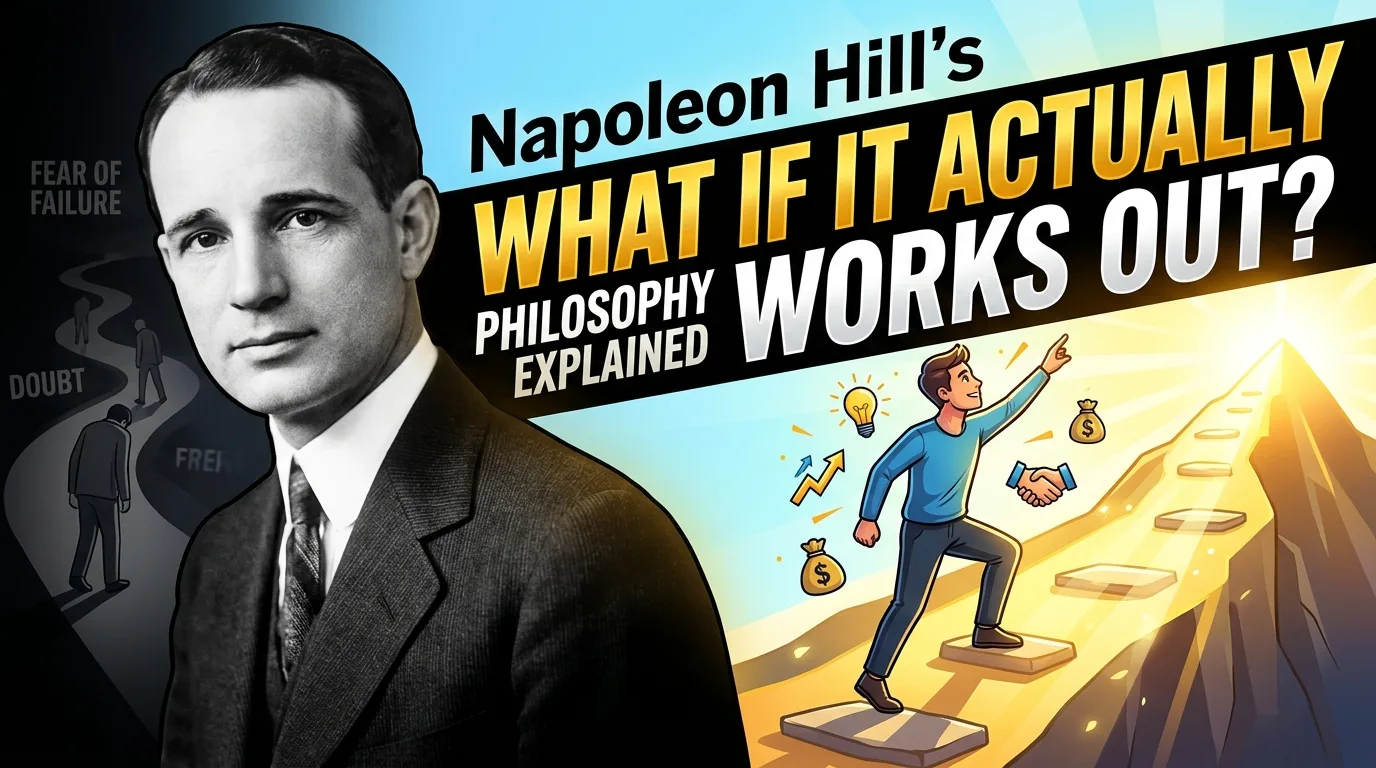
The transcript makes one thing very clear: impossible results do not begin with luck. They begin with thinking. Not random thinking, not emotional thinking, but disciplined thinking directed toward a definite purpose. The message is simple. If you want to do what others call impossible, you must first stop thinking like everyone else.
Most people do not fail because they lack talent. They fail because their minds are scattered. They absorb fear, doubt, and other people’s limits until those limits become their own. The transcript argues that the mind is sacred soil. Whatever you plant there, whether fear or vision, eventually shapes your life.
That is why thinking matters so much. If your thoughts are weak, your results will be weak. If your thoughts are controlled, clear, and repeated with belief, your life begins to move in that same direction. The impossible is not defeated by effort alone. It is defeated by undisciplined thought.
One of the strongest ideas in the transcript is definite purpose. You cannot build something meaningful if you do not know exactly what you want. The person who achieves the impossible is not vague. He knows the outcome, the target, and the direction. That clarity becomes power.
Without definite purpose, energy gets wasted. With definite purpose, thought becomes focused and action becomes intentional. The transcript repeatedly shows that a clear mind is far more dangerous than a busy one. Clarity gives your work meaning and your behavior direction.
The transcript also teaches that faith is not passive belief. It is active behavior. It means acting as if the outcome is already possible, even before the evidence appears. This is not fantasy. It is alignment. The person who believes deeply begins to move differently, speak differently, and persist longer than the person who doubts.
This is where most people break. They wait for proof before they act. But the transcript argues that proof often comes after action. Faith creates movement, and movement creates results. If you want to achieve the impossible, you have to behave like the person who already expects it.
Another major lesson is auto-suggestion. What you repeat to yourself, especially with emotion, begins to shape your subconscious mind. That means your self-talk is not harmless. It is programming. If you keep repeating limitation, you train limitation. If you keep repeating power, clarity, and purpose, you train strength.
The transcript pushes repeated affirmation, not as empty motivation, but as mental training. The point is to feed the mind with thoughts that support your future instead of thoughts that sabotage it. The impossible starts to look possible when your inner language changes.
The transcript also stresses controlled attention. In a distracted world, attention is one of the most valuable forms of power. What you keep thinking about grows stronger. What you ignore weakens. That means your focus must be protected if you want your life to change.
If you give attention to fear, you build fear. If you give attention to your mission, you build momentum. This is why the transcript treats controlled attention as a law. Your results follow your focus. That is not theory. It is the foundation of achievement.
The transcript ends with a hard truth. The impossible is never really impossible. It only looks that way to people who have not learned how to think correctly. Once your thoughts, faith, purpose, discipline, and action all align, your results begin to change. That is how great things are built. Not by wishing, but by thinking with intent and acting without retreat.
StoryKafe is a dynamic online hub for storytelling, empowering creators to share meaningful, user-generated content across topics like business, technology, health, education, and beyond - turning stories into impactful conversations.