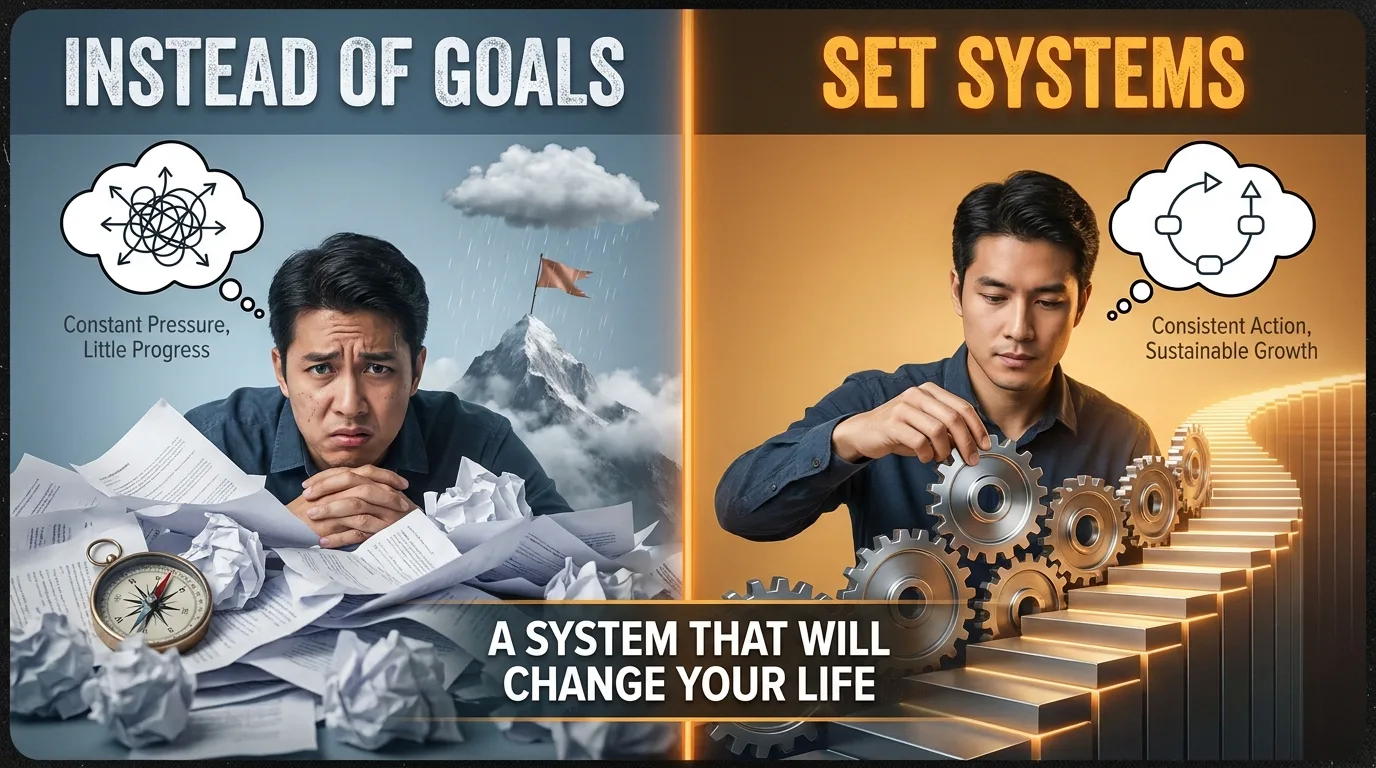
Most people want more money, more freedom, and more success. But wanting more is not enough. Real change begins when you become more capable, disciplined, focused, and prepared to handle the opportunities you are asking for.
Growth rarely happens by accident. It requires a conscious decision to stop repeating the same habits and start becoming a stronger version of yourself. The process may be uncomfortable, but that discomfort can become part of the transformation.
It is easy to stay familiar. You can keep the same routines, think the same thoughts, make the same excuses, and still hope that your circumstances will somehow change.
But a different life requires a different version of you.
Personal growth means recognizing that your current habits may not be enough for the future you want. That realization is not a reason for self-criticism. It is an invitation to improve - a shift in outlook similar to what psychologists call a growth mindset, the belief that abilities can be developed rather than treated as fixed.
You may need to study more, think more deeply, control your impulses, improve your communication, or simply become more consistent with the things that matter.
Growth does not always feel motivating or exciting. Sometimes it feels confusing, lonely, or difficult.
You may have to give up habits that once felt comfortable. You may discover weaknesses you would rather ignore. You may have to change your environment or distance yourself from people who constantly pull you back into old patterns.
That discomfort does not necessarily mean something is wrong. It can be a sign that your old way of operating is being challenged.
The important thing is to keep moving forward instead of treating temporary discomfort as a reason to stop.
Motivation comes and goes. Discipline gives your growth structure. If motivation is the part that feels unreliable, then, How to Trick Your Brain Into Discipline goes further into building the neuroscience-backed habits that keep you consistent when motivation runs out.
Waking up when you said you would, keeping promises to yourself, learning consistently, managing your time, delaying unnecessary gratification, and finishing what you start may seem like small actions. Repeated over months and years, however, they can fundamentally change how you see yourself.
Confidence becomes stronger when it is supported by evidence. Every time you do something difficult that you previously avoided, you give yourself another reason to trust your own ability.
One of the strongest ideas behind sustainable success is the connection between growth and value.
The more you learn, solve problems, communicate clearly, create useful things, and develop dependable skills, the more value you can provide to other people.
That does not mean wealth is guaranteed simply because someone works hard. Results also depend on opportunity, circumstances, decisions, markets, relationships, and execution. But continuous growth can increase your ability to recognize opportunities and make better use of them.
Instead of asking only what you want to receive, ask what you are becoming capable of contributing.
Your surroundings matter more than many people realize.
Spend enough time around people who constantly complain, avoid responsibility, or discourage ambition, and staying the same can start to feel normal. Spend time around people who learn, build, question themselves, and pursue meaningful goals, and personal improvement becomes easier to prioritize.
Seek environments that challenge you without destroying your confidence. Read, learn, find mentors, and expose yourself to ideas that force you to think differently.
Growth becomes easier to manage when you make it visible.
Track the habits that matter to you. Review your progress. Look at where your time is going. Ask yourself what you learned, what you completed, what you avoided, and what needs to change.
The purpose is not perfection. The purpose is awareness.
A simple daily question can be powerful: What did I do today that made me better than yesterday?
Success should not become an excuse to stop improving.
As responsibilities increase, you need greater patience, better judgment, stronger habits, and deeper self-control. Bigger goals require a larger capacity to handle pressure.
If you want a structured way to kick this off, The Complete Reset Blueprint lays out a concrete reset plan built around exactly this kind of identity shift.
The ultimate reward of growth is not simply a larger bank account. It is becoming someone capable of creating, managing, protecting, and using success responsibly.
Wealth and recognition may follow growth, but growth itself is the foundation. Keep learning. Keep refining your habits. Keep challenging your limitations.
You do not have to become a completely different person overnight. You simply have to refuse to remain the same person forever.
StoryKafe is a dynamic online hub for storytelling, empowering creators to share meaningful, user-generated content across topics like business, technology, health, education, and beyond - turning stories into impactful conversations.