What you think about before going to sleep can become the last message your mind receives at the end of the day. Instead of going to bed carrying financial anxiety, unfinished worries, and thoughts about everything that could go wrong, you can use those quiet hours to reflect on your goals and strengthen the mindset you want to carry into tomorrow.
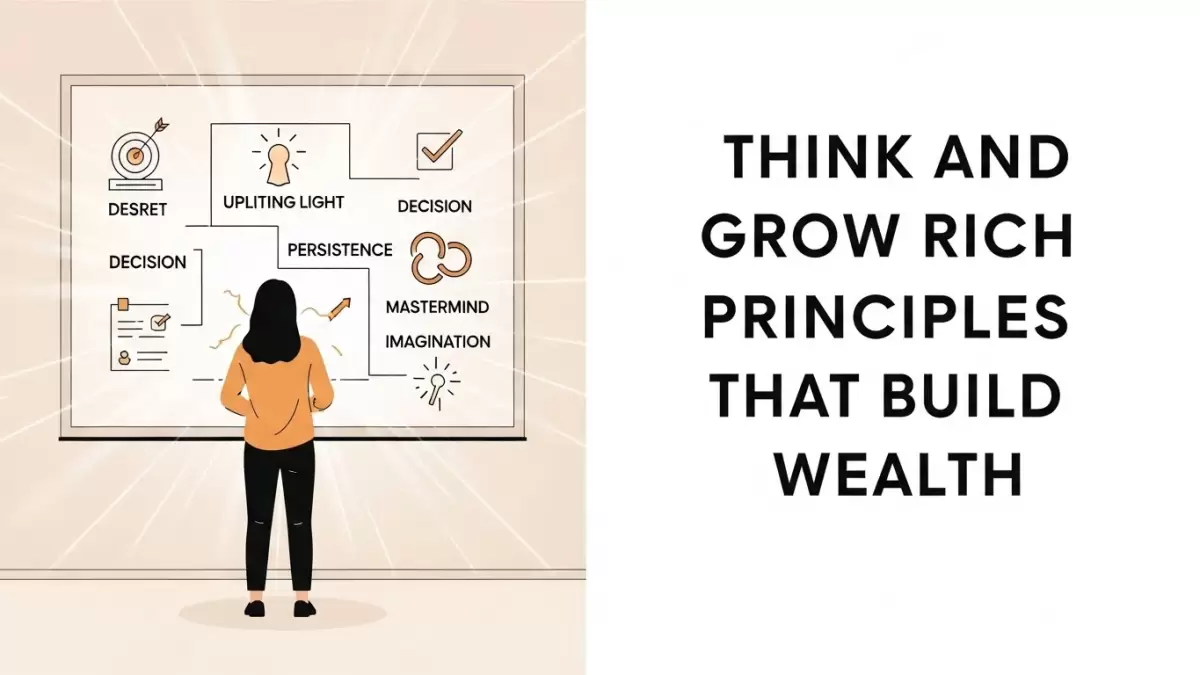
A central idea in classic success literature is that repeated thoughts can influence your habits, expectations, and behavior. William Walker Atkinson's Thought Vibration emphasized the role of dominant thought and mental control, while Napoleon Hill's Think and Grow Rich placed strong emphasis on desire, faith, decision, imagination, and persistence.
The nighttime practice described here brings many of those ideas together. If you'd like to go deeper on this exact routine, How to Program Your Mind walks through the law of autosuggestion and a full nightly ritual in more detail.
When the day ends, conscious attention becomes quieter. That makes bedtime a natural opportunity for reflection, visualization, and mental rehearsal. The transcript presents sleep as a kind of workshop where repeated ideas can continue influencing the mind even after conscious attention fades.
The useful takeaway is not that your subconscious will magically create money while you sleep. There is no good basis for promising that. The practical value is that what you repeatedly focus on can influence what you remember, what you expect, and how you approach decisions the following day.
Instead of falling asleep with the thought that money is always difficult, you can end the day by reconnecting with a clearer financial goal and a more constructive attitude toward it.
A single positive thought rarely changes much. Repetition is what gives an idea staying power.
Atkinson wrote extensively about repeated thoughts and the development of dominant mental states. His framework argued that the ideas occupying the mind most consistently have a greater influence on the person's experience and direction.
This does not mean every thought becomes reality. It means repeated mental patterns can become familiar enough to influence how you interpret situations.
For example, someone who repeatedly tells themselves that they are bad with money may approach every financial decision with hesitation or fear. Someone who repeatedly reinforces the idea that they can become more financially capable may be more willing to learn, plan, negotiate, and act.
The difference begins with the thought, but it becomes visible through behavior.
Trying to force yourself not to think about money problems can keep your attention focused on the very problem you want to escape.
A better approach is substitution. Notice the old thought, then deliberately replace it with a more useful one.
Instead of "I will never have enough," you might use a statement such as, "I am becoming more capable of creating, managing, and growing wealth."
The new statement should be something you can actually engage with. The goal is not to convince yourself that you are already a billionaire. The goal is to develop a mental direction that encourages useful behavior instead of reinforcing defeat.
The transcript repeatedly connects wealth with purpose rather than money alone. This is an important distinction.
A financial goal becomes more meaningful when you know why you want it. Perhaps you want greater freedom, more security, the ability to support your family, or the opportunity to build a business.
Napoleon Hill's philosophy similarly emphasizes the importance of a definite desire and a definite purpose. His discussion of persistence also connects sustained effort with a clearly defined goal.
When the reason behind a goal is clear, it becomes easier to make decisions that support it.
Visualization can help make an abstract goal more concrete. Instead of only thinking about an amount of money, picture what financial stability would actually look like in your everyday life.
Imagine having greater control over your expenses, feeling comfortable with your savings, running a successful business, or having enough financial flexibility to make important choices without constant stress.
But visualization should not become an excuse for inaction.
The useful combination is simple: imagine the outcome, then identify the next action. The transcript itself eventually arrives at this point by emphasizing the relationship between thought, emotion, and action.
Your mental picture gives direction. Your actions give it a chance to become real.
One of the strongest ideas in the transcript is that thinking, feeling, and doing should not contradict one another. If you repeatedly tell yourself that you want financial success while behaving in ways that consistently undermine that goal, the internal conflict remains.
Think of these three elements as working together.
Your thoughts define what you are aiming toward. Your emotional state influences how you respond to difficulty. Your actions determine what you actually do about the goal.
When these three are reasonably aligned, progress becomes more consistent.
You do not need to feel confident every minute of the day. You simply need to keep returning to the direction you have chosen.
Many people start financial or personal goals with enormous enthusiasm. The problem comes a few weeks later when the excitement disappears.
This is where persistence becomes more important than motivation. Napoleon Hill dedicated an entire chapter of Think and Grow Rich to persistence and described it as essential for turning desire into monetary results.
Persistence does not mean blindly continuing with a bad strategy. It means remaining committed to the objective while being willing to adjust your methods.
You may need to change your plan, learn a new skill, reduce your expenses, find new customers, or rethink your business model. The goal can remain while the strategy evolves.
Expectation influences how you approach the future.
Someone expecting failure may hesitate before taking an opportunity. Someone expecting improvement is more likely to look for possibilities, prepare for challenges, and continue after setbacks.
That does not mean positive expectations guarantee positive outcomes. Reality is more complicated than that. Economic conditions, other people's decisions, health, timing, and countless external factors matter.
But expectations still affect participation. They influence whether you notice opportunities, how much effort you invest, and how you interpret setbacks.
A useful nighttime routine does not have to take hours. Before going to sleep, review what matters to you. Think about your financial goal, remind yourself why it matters, visualize the outcome briefly, and decide what action you will take the next day.
You can finish with a simple statement such as:
"I am building greater financial freedom through clear thinking, useful action, and consistent effort."
Then let the day end.
The purpose is not to force your subconscious to manufacture wealth overnight. It is to create a repeated mental habit that keeps your goals visible and your attention directed toward constructive action.
Wealth does not begin with a bedtime affirmation, and no mindset technique can guarantee a financial result. Building wealth still requires skills, planning, work, judgment, and persistence.
But your mental habits matter because they influence the way you approach those things.
A better nighttime routine can help you end the day with clarity instead of anxiety, purpose instead of confusion, and intention instead of drift. When that process is repeated consistently, your thoughts and behaviors can begin moving in the same direction.
The real goal is not to fall asleep pretending that success has already arrived. It is to wake up knowing exactly what you are working toward and what you are going to do next.
StoryKafe is a dynamic online hub for storytelling, empowering creators to share meaningful, user-generated content across topics like business, technology, health, education, and beyond - turning stories into impactful conversations.